
Force Traveller AC vs Non-AC: Complete Comparison Guide for Group Travel
Planning a group trip often comes with one major dilemma—should you book an air-conditioned vehicle or save money with a standard one? When it comes to group travel in India, the Force Traveller AC vs Non-AC debate is the most common question travelers ask before finalizing their rental.
The Force Traveller has become the backbone of Indian group transportation. It is reliable, spacious, and built for Indian roads. However, choosing between AC and Non-AC variants depends on several factors: travel season, route, passenger age, budget, and trip duration.
This guide breaks down everything you need to know. By the end, you will know exactly which variant suits your family trip, corporate event, or wedding convoy.
Quick Answer: AC or Non-AC?
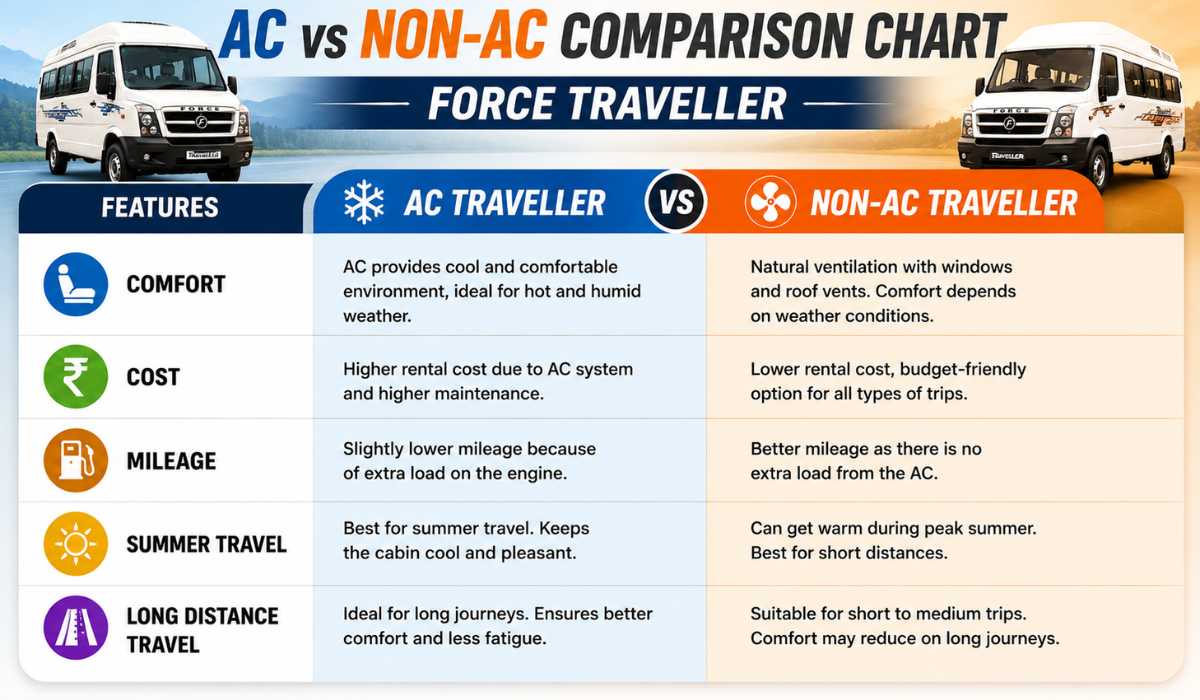
For most long-distance trips, summer travel, and corporate transportation, an AC Force Traveller is the better choice. For winter travel, short city transfers, and budget-conscious groups, a Non-AC Force Traveller can be a practical and economical option.
Here is what travelers typically choose based on their situation:
| Travel Situation | Best Choice | Why? |
|---|---|---|
| Summer travel (April–June) | AC | Outside temperatures exceed 40°C; Non-AC becomes uncomfortable |
| Winter travel (Dec–Feb) | Non-AC | Pleasant weather; save on rental cost |
| Golden Triangle Tour | AC | Dusty highways + long distances + multi-day comfort |
| Corporate travel | AC | Professional image, formal clothes, noise-free environment |
| Local city transfer (<1 hour) | Non-AC | Short duration, minimal discomfort, budget-friendly |
| Elderly passengers or infants | AC | Temperature stability prevents health issues |
| Hill station trip (Manali, Munnar) | Non-AC | Cool mountain air; open windows enhance experience |
| Wedding guest transport (outstation) | AC | Guests arrive fresh; delicate fabrics protected |
| Budget-conscious group | Non-AC | Lower rental + better fuel efficiency |
What Is a Force Traveller?
The Force Traveller is a popular light commercial vehicle widely used for passenger transportation across India. It dominates the group travel segment because of its sturdy build, high roof, and flexible seating arrangements.
Common seating configurations include 9, 12, 13, 17, and 26-seater options. You will find Force Traveller rental services for:
Outstation tour vehicles
Wedding guest transporters
Pilgrimage tour vehicles
Sightseeing taxis
For most travelers, the Force Traveller booking process is simple. The real challenge is deciding whether you need the cooling comfort of an AC or the budget-friendly nature of a Non-AC vehicle.
Force Traveller AC vs Non-AC: Quick Comparison Table
| Feature | Force Traveller AC | Force Traveller Non-AC |
|---|---|---|
| Passenger Comfort | High (climate controlled) | Moderate (dependent on weather) |
| Temperature Control | Yes (adjustable) | No (only outside air flow) |
| Dust Protection | Excellent (windows closed) | Poor (dust enters through windows) |
| Noise Level | Low (windows shut) | High (wind and traffic noise) |
| Fuel Efficiency | Lower (AC consumes fuel) | Higher (no AC load on engine) |
| Best Season | Summer, Monsoon | Winter, Hill stations |
| Typical Rental Cost | Generally higher | Generally lower |
| Recommended For | Corporate, family, long trips | Budget groups, short trips, cold regions |
What We See Most Customers Choose (Based on Experience)
Based on our experience handling Force Traveller booking requests across Delhi, Agra, Jaipur, and the Golden Triangle, here are general patterns:
Delhi to Agra in summer: AC variants are significantly more popular. Most travelers prefer AC for this route during hot months.
Delhi to Jaipur year-round: AC is generally preferred, mainly due to dust and highway noise.
Golden Triangle tours (3-7 days): AC is the clear favorite. Non-AC bookings for this route usually come from extreme budget travelers, and some upgrade after the first day.
Wedding guest shuttles (local, winter): Non-AC works well for short hops and is often chosen.
Corporate outings: AC is almost always selected. Companies rarely compromise on employee comfort.
Hill station trips in summer: A noticeable portion of travelers choose Non-AC specifically to enjoy fresh mountain air.
Practical tip: If you are confused, book AC for the first day of a multi-day trip. You can always turn it off if the weather is cool. But you cannot add AC to a Non-AC vehicle.
Difference Between Force Traveller AC and Non-AC
Understanding the specific differences helps you make an informed decision. These are not just about temperature. The gap between the two variants affects every part of the journey.
Passenger Comfort
An AC Force Traveller maintains a steady, pleasant environment regardless of outside conditions. Non-AC vehicles depend entirely on open windows and roof vents. On a hot afternoon or during humid monsoon months, Non-AC travellers can become uncomfortable quickly—especially when stuck in traffic.
Temperature Control
AC variants allow passengers to set and maintain a desired temperature. Non-AC offers no control. You are at the mercy of the sun, outside temperature, and air flow. For elderly passengers or young children, extreme heat can cause fatigue and discomfort.
Dust and Noise Protection
Indian highways and city roads often have significant dust. In a Non-AC Traveller, keeping windows open means dust enters the cabin. Eyes water, clothes get dirty, and luggage collects dust. AC Traveller rental vehicles run with sealed windows, keeping the cabin clean and quiet. Noise from horns, trucks, and traffic is also significantly reduced.
Seating Experience
Seat quality and spacing are similar in both variants. However, the experience differs. In an AC vehicle, seats remain cool. In a Non-AC, vinyl or fabric seats can become hot and sticky. Leather or foam seats in Non-AC vehicles absorb sweat, making long journeys unpleasant.
Cabin Environment
The cabin environment includes humidity, air freshness, and overall hygiene. AC units filter and dehumidify the air. Non-AC vehicles pull in outside air directly—complete with dust, smoke, and humidity. For asthmatic passengers or those with allergies, AC is clearly better.
AC vs Non-AC for Different Seating Capacities (9, 12, 17, 26 Seater)
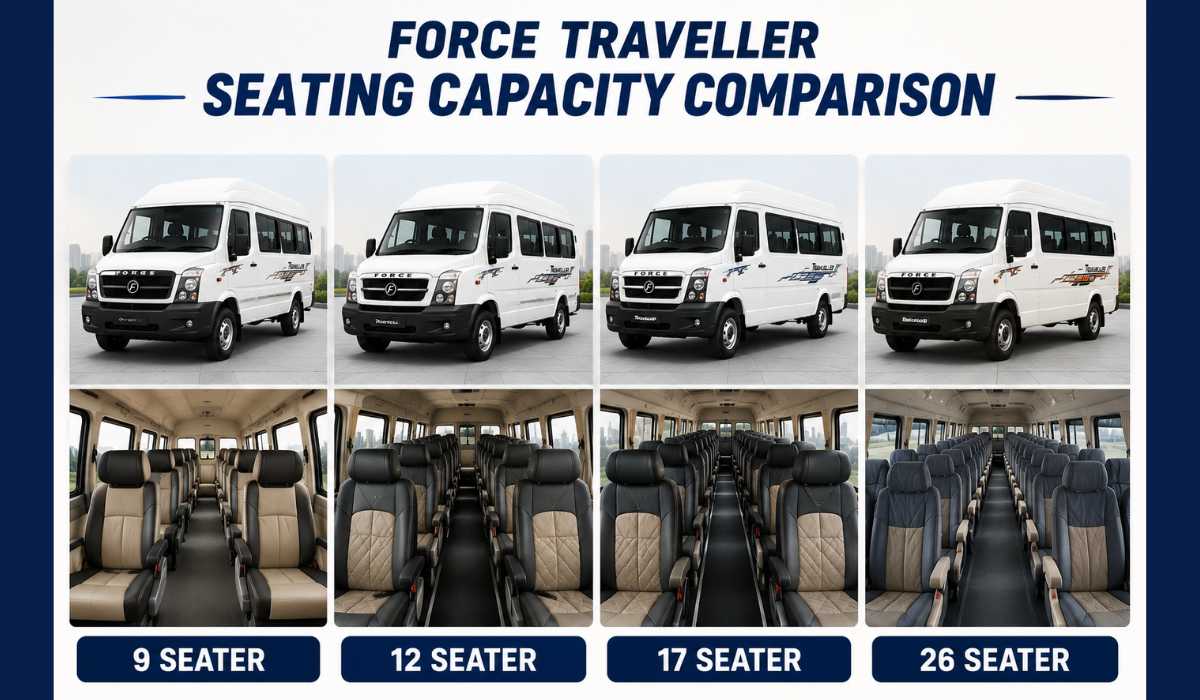
Not all Force Travellers are the same. The seating capacity changes how AC and Non-AC perform.
9-Seater Force Traveller
AC effectiveness: Excellent. Smaller cabin cools quickly.
Non-AC experience: Windows are large; good ventilation. Suitable for short trips.
Best for: Airport transfers, executive travel, small families.
12-Seater Force Traveller
AC effectiveness: Very good. Most popular for AC variant.
Non-AC experience: Middle rows get less airflow. Rear seats can feel stuffy.
Best for: Friend groups, two families traveling together.
17-Seater Force Traveller
AC effectiveness: Requires a well-maintained AC unit. Rear seats take time to cool.
Non-AC experience: Open windows create strong drafts but rear passengers may still feel hot in summer.
Best for: Large family reunions, wedding guests, temple tours.
26-Seater Force Traveller
AC effectiveness: Needs a powerful AC (factory-fitted dual AC recommended). Single AC units struggle.
Non-AC experience: Last rows become very uncomfortable in summer. Only use for winter or hill stations.
Best for: Corporate bulk transfers, large wedding groups, college tours.
Recommendation: For 17 and 26-seater Non-AC, avoid booking between March and October unless traveling exclusively at night or to hill stations.
AC vs Non-AC: Pros and Cons
| AC Force Traveller | Non-AC Force Traveller |
|---|---|
| ✅ Better comfort in heat | ✅ Lower rental cost |
| ✅ Less dust inside cabin | ✅ Better fuel efficiency |
| ✅ Reduced road noise | ✅ Works well in winter and hills |
| ✅ Best for long-distance trips | ✅ Suitable for short local trips |
| ✅ Safer for children and elderly | ✅ Budget-friendly for groups |
| ❌ Higher rental cost | ❌ Uncomfortable in summer |
| ❌ Lower fuel efficiency | ❌ Dust and noise enter freely |
| ❌ Requires regular AC maintenance | ❌ No temperature control |
Fuel Efficiency and Running Costs
This is where the Non-AC variant wins. An AC compressor draws power from the engine, increasing fuel consumption. On average, a Force Traveller AC consumes more fuel than its Non-AC counterpart.
For a 300 km trip, this difference adds up. Rental companies often pass this cost to customers through higher rental rates for AC vehicles. However, the extra cost is usually worth it during peak summer or on dusty routes.
Pro tip: For early morning or late evening trips in winter, a Non-AC vehicle may be perfectly comfortable and more economical.
Which Variant Is Better for Summer Travel?
AC, without question.
Indian summers are intense. Temperatures in Delhi, Rajasthan, and central India regularly cross 40°C. Sitting in a Non-AC Traveller for hours under direct sunlight is exhausting. Heat stroke, dehydration, and fatigue ruin the travel experience.
If you are traveling between March and October in most Indian plains, always choose a Force Traveller AC. It is not a luxury; it becomes a necessity for safety and basic comfort.
Which Variant Is Better for Long-Distance Travel?
For trips exceeding 150 km one way, AC is strongly recommended. Long-distance travel means spending 4 to 8 hours inside the vehicle. Without AC, passengers arrive tired, sweaty, and irritable.
However, there is one exception—hill station routes. On drives to Manali, Shimla, Nainital, or Munnar, outside temperatures remain cool even in summer. In such cases, a Force Traveller Non-AC with open windows offers fresh mountain air and scenic views. Many travelers actually prefer Non-AC in the hills.
Which Variant Is Better for Family Trips?
AC is better for families, especially when traveling with children or senior citizens.
Young children cannot regulate body temperature effectively. Prolonged heat exposure causes restlessness and crying. Elderly family members may have blood pressure or heart conditions that worsen in extreme heat.
Additionally, families carry more luggage and snacks. In a Non-AC vehicle with open windows, dust settles on everything. An AC environment keeps luggage clean and family members fresh for sightseeing.
Which Variant Is Better for Corporate Travel?
Corporate travel demands professionalism and comfort. Employees or clients traveling for meetings, team outings, or airport transfers expect a clean, quiet, and cool environment.
A Non-AC vehicle with open windows creates noise, blows dust on formal clothes, and looks less professional. Force Traveller AC is the only acceptable choice for corporate group transportation.
If you need a Force Traveller for outstation trip with colleagues, always request the AC variant. It reflects well on your organization and keeps your team productive.
Which Variant Is Better for Wedding Transportation?
Wedding season in India falls mostly between October and March. These months have pleasant weather in most regions. For local wedding guest shuttles—short distances between hotels, venues, and homes—a Non-AC Force Traveller can work perfectly.
However, for outstation wedding guest travel or summer weddings, AC is better. Wedding guests wear delicate fabrics. Sweat stains and dust damage expensive clothing. Also, elderly relatives attending weddings appreciate the controlled environment of an AC vehicle.
Many wedding planners book a mix—Non-AC for local short hops and AC for airport transfers and outstation guest pickup.
AC vs Non-AC for Popular Tourist Routes
Real route examples help clarify the decision.
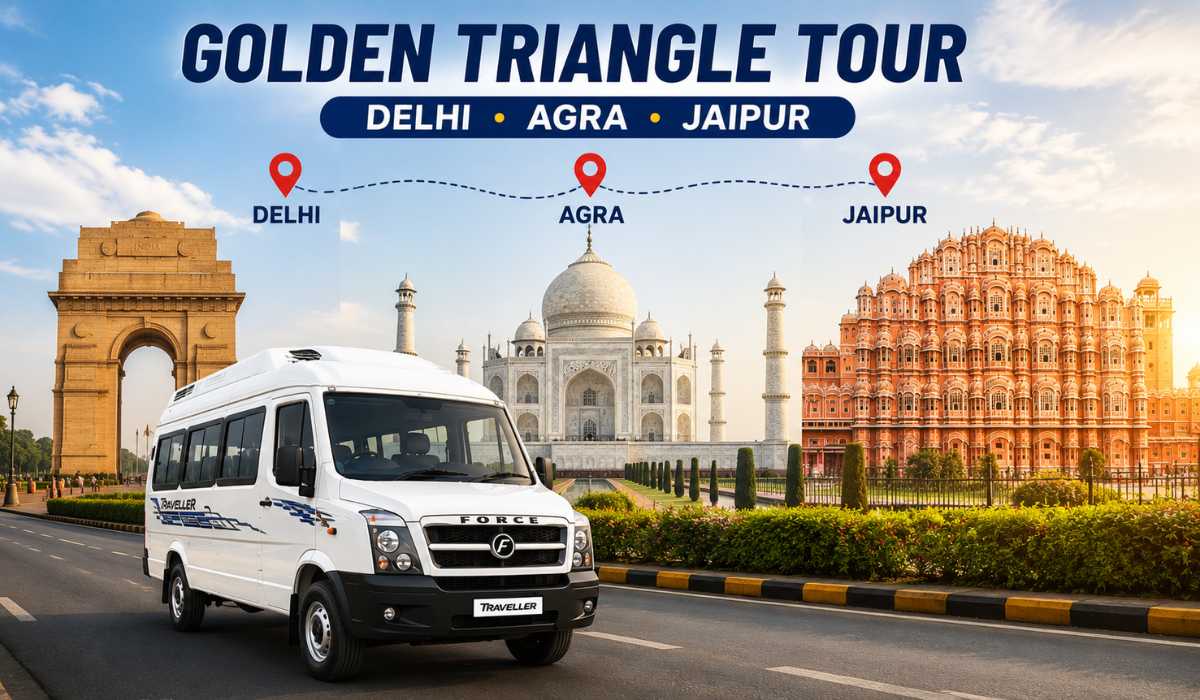
Delhi to Agra (approx 230 km, 4 hours)
Summer: AC essential. Winter: Non-AC works well during daytime. The Yamuna Expressway has high speeds; open windows create strong wind noise. AC offers a quieter ride.
Travelers planning this route often prefer a Force Traveller in Delhi for comfortable group transportation.
Delhi to Jaipur (approx 270 km, 5 hours)
This route passes through dusty industrial areas and open highways. Non-AC vehicles bring in significant dust. AC is highly recommended year-round except peak winter.
For reliable Force Traveller in Jaipur options, consider your travel season carefully.
Golden Triangle Tour (Delhi–Agra–Jaipur)
A 5–7 day tour covering 600+ km. You cannot spend days inside a dusty, hot vehicle. Always book a Force Traveller AC for Golden Triangle tours.
Check Force Traveller in Agra availability if your tour starts or halts there.
Religious Tours (Haridwar, Rishikesh, Varanasi, Tirupati)
These involve early morning starts and crowded temple towns. AC provides relief after long walking and queuing in the sun. However, hill temple routes (like Vaishno Devi or Palani) may allow Non-AC due to cooler weather.
Weekend Group Trips (Jaipur, Mussoorie, Lonavala)
For summer weekends: AC. For winter or monsoon weekends: Non-AC may be fine, especially if your group enjoys fresh air.
Cost Comparison – Is AC Worth the Extra Price?
AC vehicles cost more to rent. The price difference depends on the city, season, and trip duration.
Generally, AC variants cost more than Non-AC. For a single-day local trip, the difference may feel small. For a week-long outstation tour, it adds up significantly.
Is it worth it?
On a hot day: Yes. Every rupee is worth the comfort.
On a cold day or hill route: No. Save the money.
For elderly or children: Yes. Health and comfort matter.
For corporate or wedding guests: Yes. Perception and experience matter.
Think of the AC premium as an investment in your group’s energy levels. A comfortable group enjoys sightseeing more and complains less.
When Should You Choose an AC Force Traveller?
Traveling between March and October in most Indian plains
Traveling with elderly passengers, infants, or people with health conditions
Corporate travel, client meetings, or airport transfers
Wedding guest transportation for outstation or summer weddings
Dusty routes including highways under construction or industrial zones
Long-distance trips exceeding 4 hours
Golden Triangle or Rajasthan tours (except deep winter)
When you need luggage to remain dust-free
For 17 or 26-seater vehicles in summer (rear passengers suffer without AC)
When Should You Choose a Non-AC Force Traveller?
Traveling between November and February in North India
Hill station routes where outside air is cool and fresh
Very short local trips (under 1 hour)
Extremely tight budget with no flexibility
Groups that specifically want open-air travel experience
Early morning or late night travel in mild weather
Rainy season trips with cool winds (keeping windows partially open)
Wedding guest shuttles within the same city during winter
Best Choice by Travel Type
| Travel Type | Recommended Variant |
|---|---|
| Family Vacation | AC |
| Corporate Travel | AC |
| Wedding Transport (outstation) | AC |
| Airport Transfer | AC |
| Hill Station Trip | Non-AC |
| Local City Transfer | Non-AC |
| Budget Group Tour | Non-AC |
| Golden Triangle Tour | AC |
Questions to Ask Before Booking a Force Traveller
Before you confirm your Force Traveller booking, ask these 7 questions to the rental provider. This will save you from surprises.
Is the AC factory-fitted or aftermarket?
Factory AC cools better and is more reliable. Aftermarket units often fail on long trips.Is the vehicle tourist permit approved?
Without a tourist permit, you cannot legally take the vehicle out of state. Always verify.Is driver allowance included in the quoted price?
Many rentals quote low but add driver food and accommodation separately.Are tolls, taxes, and parking included?
Get a clear breakdown. Some providers charge tolls extra.What seating configuration is available?
For a 17-seater, is it 15+2 (15 passengers + 2 crew)? Confirm actual passenger capacity.Is luggage space sufficient for our group?
A 12-seater with 12 large suitcases may not fit. Ask for luggage dimensions.What is the cancellation policy?
Life happens. Know the refund timeline.
Always ask for a written confirmation of what is included in your Force Traveller rental quote.
Common Mistakes People Make While Choosing a Traveller
1. Booking Non-AC to save money in summer
This backfires. Passengers become irritable. You end up spending more on cold drinks, stops, and sometimes even renting a different vehicle midway.
2. Assuming all ACs work perfectly
Not all rental vehicles maintain their AC units well. Always ask for a confirmed AC vehicle. Check the cooling before starting your trip.
3. Booking AC for hill stations in winter
Hill stations are cold. You will not need AC. You may end up keeping windows open anyway. Save your money.
4. Ignoring dust factor
Many groups focus only on temperature. Dust is a bigger problem on highways. Even in cool weather, dusty air ruins the experience. Consider AC for dust protection, not just cooling.
5. Booking Non-AC for elderly passengers
Even if weather is mild, elderly passengers prefer stable temperatures. Sudden wind drafts, dust, and noise cause discomfort. Book AC when seniors are traveling.
6. Not confirming the vehicle age
An old AC traveller may have weak cooling. Ask for a vehicle less than 3 years old for AC bookings.
Final Verdict
The choice between Force Traveller AC vs Non-AC comes down to three factors: season, route, and passenger profile.
| Scenario | Recommendation |
|---|---|
| Summer in plains | AC |
| Winter in plains | Non-AC (daytime) |
| Hill stations | Non-AC (or AC without use) |
| Elderly or children | AC |
| Corporate travel | AC |
| Wedding (local, winter) | Non-AC |
| Wedding (outstation, summer) | AC |
| Dusty highways | AC |
| Budget group, short trip, mild weather | Non-AC |
| 17/26 seater in summer | AC (mandatory for rear seats) |
For most group travel in India, especially during peak tourist seasons, the AC variant is worth the extra cost. It ensures a clean, quiet, and comfortable journey. Your group arrives fresh, happy, and ready to explore.
However, smart travelers match the vehicle to their specific trip. A winter trip to Jaipur may not need AC. A summer drive from Delhi to Agra absolutely does.
Before you book, ask yourself: Will my passengers be comfortable for the entire duration? Answer honestly, and you will know which variant to choose.
If you are comparing options for an upcoming trip, you can explore available Force Traveller booking in India options based on your group size, route, and travel season.
Frequently Asked Questions (FAQ)
1. Is AC Force Traveller worth it?
Yes, for summer travel, long distances, dusty routes, and groups with elderly or children. For hill stations and winter travel, the extra cost may not be necessary.
2. Which is better for summer travel?
The AC variant is significantly better. Non-AC vehicles become uncomfortably hot in Indian summers, especially between 11 AM and 5 PM.
3. Is Non-AC suitable for long-distance trips?
Only if traveling in cool weather (winter months) or through hill stations. For long summer trips, Non-AC is not recommended due to heat, dust, and passenger fatigue.
4. Which variant is best for families?
The AC variant is best for families, especially when traveling with children or senior citizens. It provides a safer, cleaner, and more comfortable environment.
5. Which is cheaper to rent?
Non-AC Force Travellers are generally cheaper than AC variants. However, the price difference varies by city and season.
6. Is AC mandatory for Golden Triangle tours?
Not mandatory, but strongly recommended. The Golden Triangle route covers dusty highways and warm climates. AC ensures a pleasant multi-day experience.
7. Which Force Traveller is best for corporate groups?
AC Force Traveller is the standard choice for corporate travel. It maintains a professional environment, protects formal clothing, and keeps passengers comfortable.
8. Which Force Traveller is best for senior citizens?
Always AC. Senior citizens are more vulnerable to heat, dust, and dehydration. A stable, cool environment prevents health complications.
9. Can I book AC and Non-AC Force Traveller online?
Yes, through most rental platforms including Go Bus India. You can select your preferred variant, seating capacity, and trip type online.
10. Is a Non-AC Force Traveller suitable during monsoon?
Yes, a Non-AC Force Traveller can be suitable during monsoon in regions with moderate temperatures. However, AC variants provide better protection from humidity, road noise, and outside dust during long-distance travel.
Check Our Buses
Check Out our buses. Just Click on "Check our Buses" to check all the available options which is suitable for you.